Read more of this story at Slashdot.
Amid a push toward AI agents, with both Anthropic and OpenAI shipping multi-agent tools this week, Anthropic is more than ready to show off some of its more daring AI coding experiments. But as usual with claims of AI-related achievement, you'll find some key caveats ahead.
On Thursday, Anthropic researcher Nicholas Carlini published a blog post describing how he set 16 instances of the company's Claude Opus 4.6 AI model loose on a shared codebase with minimal supervision, tasking them with building a C compiler from scratch.
Over two weeks and nearly 2,000 Claude Code sessions costing about $20,000 in API fees, the AI model agents reportedly produced a 100,000-line Rust-based compiler capable of building a bootable Linux 6.9 kernel on x86, ARM, and RISC-V architectures.
Carlini, a research scientist on Anthropic's Safeguards team who previously spent seven years at Google Brain and DeepMind, used a new feature launched with Claude Opus 4.6 called "agent teams." In practice, each Claude instance ran inside its own Docker container, cloning a shared Git repository, claiming tasks by writing lock files, then pushing completed code back upstream. No orchestration agent directed traffic. Each instance independently identified whatever problem seemed most obvious to work on next and started solving it. When merge conflicts arose, the AI model instances resolved them on their own.
The resulting compiler, which Anthropic has released on GitHub, can compile a range of major open source projects, including PostgreSQL, SQLite, Redis, FFmpeg, and QEMU. It achieved a 99 percent pass rate on the GCC torture test suite and, in what Carlini called "the developer's ultimate litmus test," compiled and ran Doom.
It's worth noting that a C compiler is a near-ideal task for semi-autonomous AI model coding: The specification is decades old and well-defined, comprehensive test suites already exist, and there's a known-good reference compiler to check against. Most real-world software projects have none of these advantages. The hard part of most development isn't writing code that passes tests; it's figuring out what the tests should be in the first place.
The compiler also has clear limitations that Carlini was upfront about. It lacks a 16-bit x86 backend needed to boot Linux from real mode, so it calls out to GCC for that step. Its own assembler and linker remain buggy. Even with all optimizations enabled, it produces less efficient code than GCC running with all optimizations disabled. And the Rust code quality, while functional, does not approach what an expert Rust programmer would produce. "The resulting compiler has nearly reached the limits of Opus's abilities," Carlini wrote. "I tried (hard!) to fix several of the above limitations but wasn't fully successful. New features and bugfixes frequently broke existing functionality."
Those limitations may actually be more informative than the successes. Carlini reports that toward the end of the project, fixing bugs and adding features "frequently broke existing functionality," a pattern familiar to anyone who has watched a codebase grow beyond the point where any contributor fully understands it.
And that limitation is even more common when dealing with AI coding agents, which lose coherence over time. The model hit this wall at around 100,000 lines, which suggests a practical ceiling for autonomous agentic coding, at least with current models.
Anthropic describes the compiler as a "clean-room implementation" because the agents had no Internet access during development. But that framing is somewhat misleading. The underlying model was trained on enormous quantities of publicly available source code, almost certainly including GCC, Clang, and numerous smaller C compilers. In traditional software development, "clean room" specifically means the implementers have never seen the original code. By that standard, this isn't one.
On Hacker News, the distinction drew sharp debate, reflective of a controversial reception to the news among developers. "It was rather a brute force attempt to decompress fuzzily stored knowledge contained within the network," wrote one commenter.
The $20,000 figure also deserves some context. That number covers only API token costs and excludes the billions spent training the model, the human labor Carlini invested in building the scaffolding, and the decades of work by compiler engineers who created the test suites and reference implementations that made the project possible.
And that scaffolding was not trivial, which makes any claim of "autonomous" work on the C compiler among the AI agents dubious. While the headline result is a compiler written without human pair-programming, much of the real work that made the project function involved designing the environment around the AI model agents rather than writing compiler code directly. Carlini spent considerable effort building test harnesses, continuous integration pipelines, and feedback systems tuned for the specific ways language models fail.
He found, for example, that verbose test output polluted the model's context window, causing it to lose track of what it was doing. To address this, Carlini designed test runners that printed only a few summary lines and logged details to separate files.
He also found that Claude has no sense of time and will spend hours running tests without making progress, so he built a fast mode that samples only 1 percent to 10 percent of test cases. When all 16 agents got stuck trying to fix the same Linux kernel bug simultaneously, he used GCC as a reference oracle, randomly compiling most kernel files with GCC and only a subset with Claude's compiler, so each agent could work on different bugs in different files.
"Claude will work autonomously to solve whatever problem I give it," Carlini wrote. "So it's important that the task verifier is nearly perfect, otherwise Claude will solve the wrong problem."
None of this should obscure what the project actually demonstrates. A year ago, no language model could have produced anything close to a functional multi-architecture compiler, even with this kind of babysitting and an unlimited budget. The methodology of parallel agents coordinating through Git with minimal human supervision is novel, and the engineering tricks Carlini developed to keep the agents productive (context-aware test output, time-boxing, the GCC oracle for parallelization) could potentially represent useful contributions to the wider use of agentic software development tools.
Carlini himself acknowledged feeling conflicted about his own results. "Building this compiler has been some of the most fun I've had recently, but I did not expect this to be anywhere near possible so early in 2026," he wrote. He also raised concerns rooted in his previous career in penetration testing, noting that "the thought of programmers deploying software they've never personally verified is a real concern."
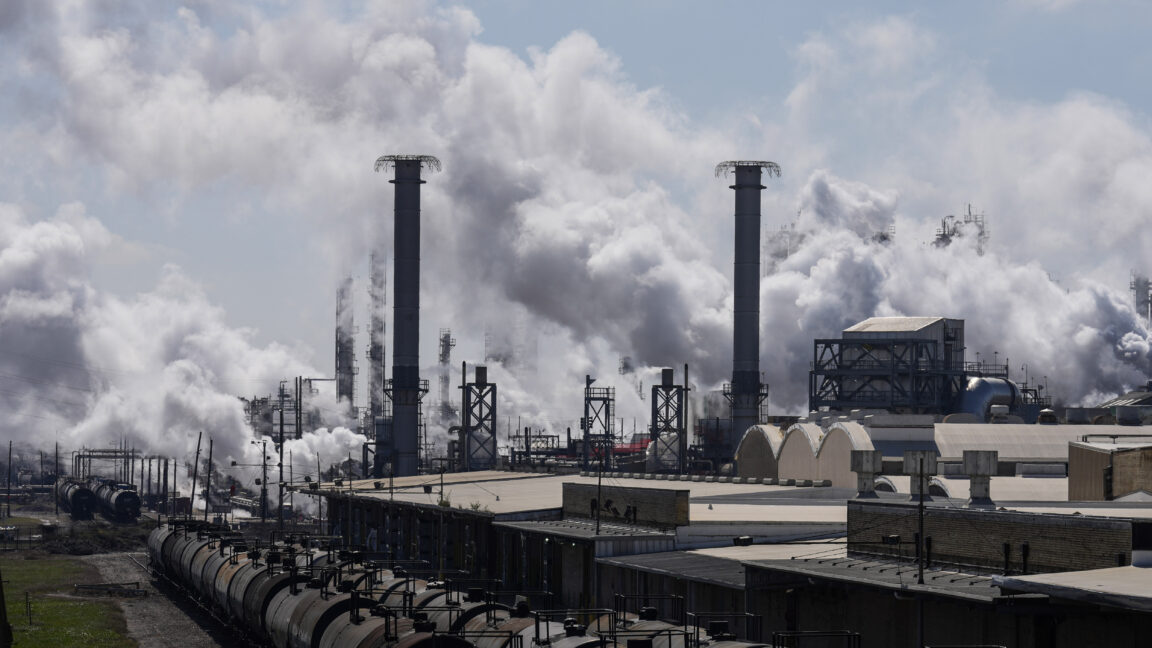
Enforcement against polluters in the United States plunged in the first year of President Donald Trump’s second term, a far bigger drop than in the same period of his first term, according to a new report from a watchdog group.
By analyzing a range of federal court and administrative data, the nonprofit Environmental Integrity Project found that civil lawsuits filed by the US Department of Justice in cases referred by the Environmental Protection Agency dropped to just 16 in the first 12 months after Trump’s inauguration on Jan. 20, 2025. That is 76 percent less than in the first year of the Biden administration.
Trump’s first administration filed 86 such cases in its first year, which was in turn a drop from the Obama administration’s 127 four years earlier.
“Our nation’s landmark environmental laws are meaningless when EPA does not enforce the rules,” Jen Duggan, executive director of the Environmental Integrity Project, said in a statement.
The findings echo two recent analyses from the nonprofits Public Employees for Environmental Responsibility and Earthjustice, which both documented dwindling environmental enforcement under Trump.
From day one of Trump’s second term, the administration has pursued an aggressive deregulatory agenda, scaling back regulations and health safeguards across the federal government that protect water, air and other parts of the environment. This push to streamline industry activities has been particularly favorable for fossil fuel companies. Trump declared an “energy emergency” immediately after his inauguration.
At the EPA, Administrator Lee Zeldin launched in March what the administration called the “biggest deregulatory action in U.S. history”: 31 separate efforts to roll back restrictions on air and water pollution; to hand over more authority to states, some of which have a long history of supporting lax enforcement; and to relinquish EPA’s mandate to act on climate change under the Clean Air Act.
The new report suggests the agency is also relaxing enforcement of existing law. Neither the White House nor the EPA responded to a request for comment.
Part of the decline in lawsuits against polluters could be due to the lack of staff to carry them out, experts say. According to an analysis from E&E News, at least a third of lawyers in the Justice Department’s environment division have left in the past year. Meanwhile, the EPA in 2025 laid off hundreds of employees who monitored pollution that could hurt human health.
Top agency officials are also directing staff to issue fewer violation notices and reduce other enforcement actions. In December, the EPA formalized a new “compliance first” enforcement policy that stresses working with suspected violators to correct problems before launching any formal action that could lead to fines or mandatory correction measures.
“Formal enforcement … is appropriate only when compliance assurance or informal enforcement is inapplicable or insufficient to achieve rapid compliance,” wrote Craig Pritzlaff, who is now a principal deputy assistant EPA administrator, in a Dec. 5 memo to all enforcement officials and regional offices.
Only in rare cases involving an immediate hazard should enforcers use traditional case tools, Pritzlaff said. “Immediate formal enforcement may be required in certain circumstances, such as when there is an emergency that presents significant harm to human health and the environment,” he wrote.
Federal agencies like the EPA, with staffs far outmatched in size compared to the vast sectors of the economy they oversee, typically have used enforcement actions not only to deal with violators but to deter other companies from breaking the law. Environmental advocates worry that without environmental cops visible on the beat, compliance will erode.
Pritzlaff joined the EPA last fall after five years heading up enforcement for the Texas Commission on Environmental Quality, where nonprofit watchdog group Public Citizen noted that he was known as a “reluctant regulator.” Public Citizen and other advocacy groups criticized TCEQ under Pritzlaff’s leadership for its reticence to take decisive action against repeat violators.
One example: An INEOS chemical plant had racked up close to 100 violations over a decade before a 2023 explosion that sent one worker to the hospital, temporarily shut down the Houston Ship Channel and sparked a fire that burned for an hour. Public Citizen said it was told by TCEQ officials that the agency allowed violations to accumulate over the years, arguing it was more efficient to handle multiple issues in a single enforcement action.
“But that proved to be untrue, instead creating a complex backlog of cases that the agency is still struggling to resolve,” Public Citizen wrote last fall after Pritzlaff joined the EPA. “That’s not efficiency, it’s failure.”
Early last year, TCEQ fined INEOS $2.3 million for an extensive list of violations that occurred between 2016 and 2021.
The EPA doesn’t always take entities to court when they violate environmental laws. At times, the agency can resolve these issues through less-formal administrative cases, which actually increased during the first eight months of Trump’s second term when compared to the same period in the Biden administration, according to the new report.
However, most of these administrative actions involved violations of requirements for risk management plans under the Clean Air Act or municipalities’ violations of the Safe Drinking Water Act. The Trump administration did not increase administrative cases that involve pollution from industrial operations, Environmental Integrity Project spokesperson Tom Pelton said over email.
Another signal of declining enforcement: Through September of last year, the EPA issued $41 million in penalties—$8 million less than the same period in the first year of the Biden administration, after adjusting for inflation. This suggests “the Trump Administration may be letting more polluters get by with a slap on the wrist when the Administration does take enforcement action,” the report reads.
Combined, the lack of lawsuits, penalties, and other enforcement actions for environmental violations could impact communities across the country, said Erika Kranz, a senior staff attorney in the Environmental and Energy Law Program at Harvard Law School, who was not involved in the report.
“We’ve been seeing the administration deregulate by repealing rules and extending compliance deadlines, and this decline in enforcement action seems like yet another mechanism that the administration is using to de-emphasize environmental and public health protections,” Kranz said. “It all appears to be connected, and if you’re a person in the US who is worried about your health and the health of your neighbors generally, this certainly could have effects.”
The report notes that many court cases last longer than a year, so it will take time to get a clearer sense of how environmental enforcement is changing under the Trump administration. However, the early data compiled by the Environmental Integrity Project and other nonprofits shows a clear and steep shift away from legal actions against polluters.
Historically, administrations have a “lot of leeway on making enforcement decisions,” Kranz said. But this stark of a drop could prompt lawsuits against the Trump administration, she added.
“Given these big changes and trends, you might see groups arguing that this is more than just an exercise of discretion or choosing priorities [and] this is more of an abdication of an agency’s core mission and its statutory duties,” Kranz said. “I think it’s going to be interesting to see if groups make those arguments, and if they do, how courts look at them.”
This article originally appeared on Inside Climate News, a nonprofit, non-partisan news organization that covers climate, energy, and the environment. Sign up for their newsletter here.
In the spring of 2020, as the COVID-19 pandemic brought global industry and travel nearly to a halt, satellite sensors recorded a dramatic plunge in nitrogen dioxide, a byproduct of internal combustion engines and heavy industry. For a moment, the world’s air was cleaner than it had been in decades.
But then something strange started happening: methane, the second most important anthropogenic greenhouse gas after carbon dioxide, was surging. Its growth rate hit 16.2 parts per billion that year, the highest since systematic records began in the early 1980s. A new study published in the journal Science looked at the complex chemistry of the troposphere (the lowest region of the atmosphere) and found that the two changes are likely connected.
Since the late 1960s, we knew that atmospheric methane doesn’t just vanish. It is actively scrubbed from the sky by the hydroxyl radical, a highly reactive molecule that breaks down methane, turning it into water vapor and carbon dioxide. “The problem is that the lifetime of the hydroxyl radical is very short—its lifespan is less than a second" says Shushi Peng, a professor at Peking University, China, and a co-author of the study. To do its job as an atmospheric methane clearing agent, a hydroxyl radical must be constantly replenished through a series of chemical reactions triggered by sunlight. The key ingredients in these reactions are nitrogen oxides, the very pollutants that were drastically reduced when cars stayed in garages and factories went dark in 2020.
When nitrogen oxide levels plummeted by approximately 15 to 20 percent globally during the 2020 lockdowns, the production of the hydroxyl radical slowed to a crawl. Without enough of these to go around, methane molecules that would have normally been destroyed remained in the atmosphere for longer. Peng and his colleagues estimate that the reduction in this methane sink accounted for approximately 80 percent of the massive spike in the methane growth rate seen in 2020. The cleaner our air became, the longer the methane stuck around to warm the planet.
The remaining question, though, was where all this methane was coming from in the first place. Throughout the pandemic, there was speculation that the surge might be caused by super-emitter events in the oil and gas sector, or perhaps a lack of maintenance on leaky infrastructure during lockdowns.
But the new research suggests that the source of these emissions was not what many expected.
While the weakened atmospheric sink explained the bulk of the 2020 surge, it wasn't the only factor at play. The remaining 20 percent of the growth, and an even larger portion of the growth in 2021 and 2022, came from an increase in actual emissions from the ground. To track the source of these emissions down, Peng’s team went through tons of data from satellites and various ground monitoring stations.
Methane comes in different isotopic signatures. Methane from fossil fuels like natural gas leaks or coal mines is heavier, containing a higher fraction of the stable isotope carbon-13. Conversely, methane produced by microbes found in the guts of livestock, in landfills, and most notably in wetlands, is lighter, enriched in carbon-12.
When the researchers analyzed data from the National Oceanic and Atmospheric Administration global flask network, a worldwide monitoring system tracking the chemical composition of Earth’s atmosphere, they found that the atmospheric methane during the mysterious surge was becoming significantly lighter. This was a smoking gun for biogenic sources. The surge wasn't coming from pipes or power plants; it was coming from microbes.
The timing of the pandemic coincided with a relatively rare meteorological event. La Niña, the cool phase of the El Niño–Southern Oscillation that typically leads to increased rainfall in the tropics, lasted for three consecutive Northern Hemisphere winters (from 2020 to 2023). This made the early 2020s exceptionally wet.
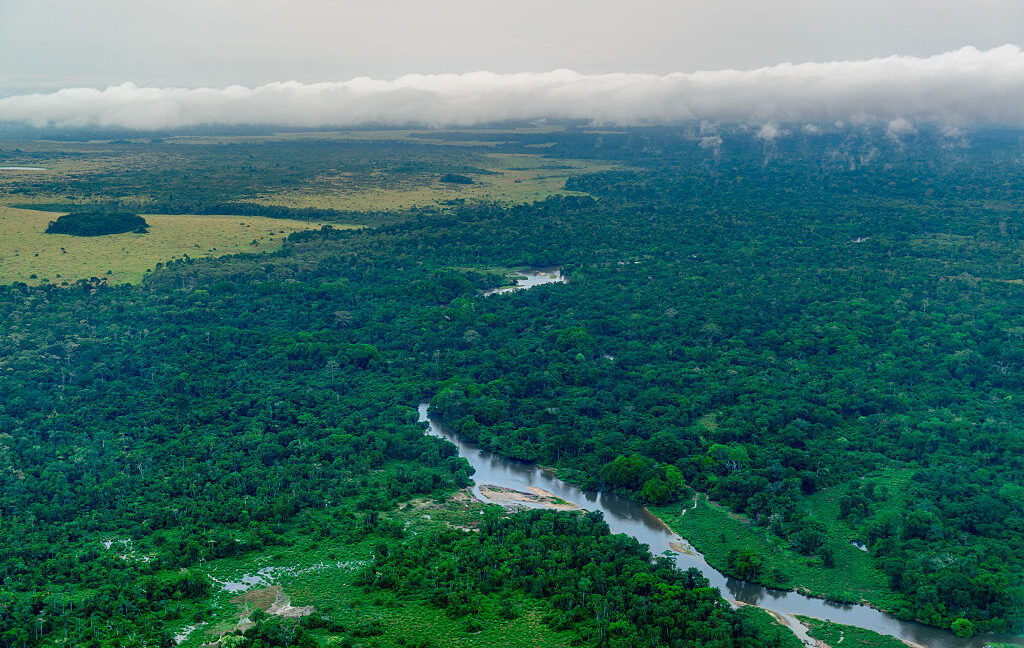
The researchers used satellite data from the Greenhouse Gases Observing Satellite and sophisticated atmospheric models to trace the source of the light methane to vast wetland areas in tropical Africa and Southeast Asia. In regions like the Sudd in South Sudan and the Congo Basin, record-breaking rainfall flooded massive swaths of land. In these waterlogged, oxygen-poor environments, microbial methanogens thrived, churning out methane at an accelerated pace.
Peng and his team found that tropical African and Asian wetlands alone were responsible for roughly 30 percent of the global methane emissions increase during the 2020–2022 period.
Methane is often touted as the low-hanging fruit of climate policy because it has a shorter atmospheric lifetime than carbon dioxide. For a long time, we thought that if we stopped the infrastructure leaks and other methane emissions today, the atmosphere would clear relatively quickly. But the study done by Peng and his colleagues shows that things might not be that simple. There are two major challenges we must face to solve the methane problem, and both are largely outside of direct human control.
First, there is the threat of climate feedbacks. If warming temperatures and changing precipitation patterns cause a boost in natural wetland emissions, we may find ourselves in a race against a biological source that we cannot simply turn off. The second challenge, arguably even harder to overcome, is the clean air paradox that emerges from the results of Peng’s study.
As we transition away from fossil fuels and improve urban air quality, nitrogen oxide levels will naturally decline—an unequivocal win for public health. But the atmosphere’s natural capacity to scrub methane will also decline.
That’s a piece of science that’s almost sure to get hopelessly distorted in our maelstrom of conflicting politics. Because it means all the coal power plants, V8 cars, and private jets actually purge a greenhouse gas out of the atmosphere, right?
“Not really, because everyone needs clean air,” argues Peng. “It means that we must reduce anthropogenic methane emissions.” If it’s just to compensate for a cleaner atmosphere with less hydroxyl radicals, we’re likely going to need even more aggressive reductions than we previously thought. “I think that’s the only choice for the policy makers,” Peng adds.
Science, 2026. DOI: 10.1126/science.adx8262